
Traditional Publishing vs Self-Publishing in Ghana: What Authors Must Know
Choosing between traditional publishing and self-publishing in Ghana is one of the most important decisions an author will ever make. This choice affects your book’s timeline, quality, earnings, ownership, and long-term impact.
Many Ghanaian authors assume traditional publishing is the “better” or “more legitimate” option—but the publishing landscape has changed dramatically. Understanding the real differences will help you avoid costly mistakes and choose the path that aligns with your goals.
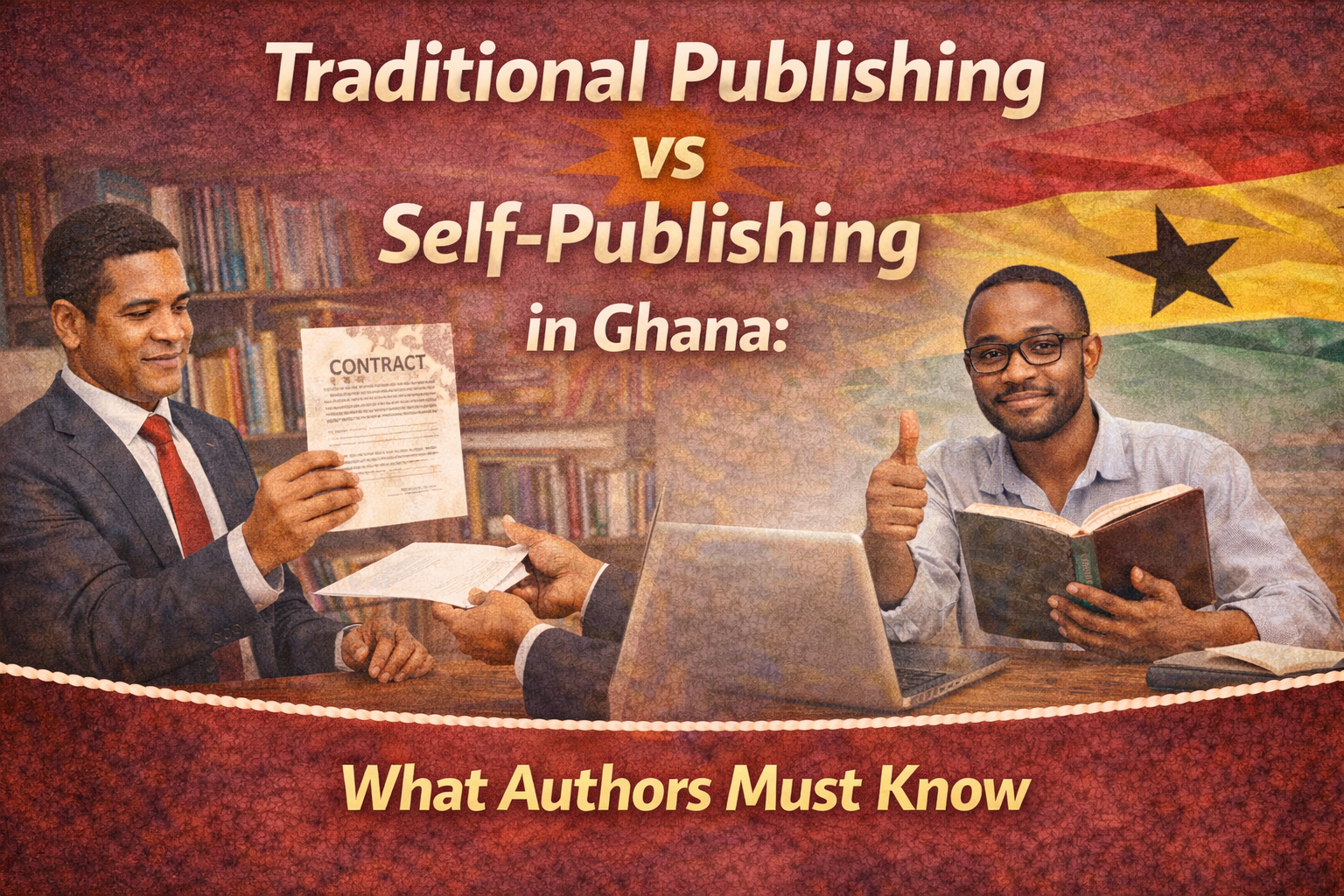
Understanding Traditional Publishing in Ghana
Traditional publishing involves submitting your manuscript to a publishing house and waiting for approval. If accepted, the publisher takes responsibility for editing, printing, and distribution—while controlling most major decisions.
How Traditional Publishing Typically Works
-
Manuscript submission
-
Long review periods
-
Possible rejection
-
Limited creative input from the author
-
Small royalty percentages
-
Slow publishing timelines
In Ghana, traditional publishers often prioritize:
-
Academic textbooks
-
Government or institutional projects
-
Established authors with proven demand
This leaves many capable writers without opportunities.
What Is Self-Publishing in Ghana?
Self-publishing in Ghana allows authors to publish their books independently while working with professional service providers for editing, design, and distribution.
Unlike traditional publishing, self-publishing gives the author full control and ownership while still achieving professional standards.
Key Differences Between Traditional Publishing and Self-Publishing in Ghana
1. Acceptance vs Control
Traditional publishing
-
Your manuscript must be approved
-
Many authors face repeated rejection
-
Publisher decides what gets published
Self-publishing in Ghana
-
You decide when and what to publish
-
No gatekeepers
-
Your voice and message stay intact
For first-time authors, self-publishing removes unnecessary barriers.
2. Publishing Timeline
Traditional publishing
-
Can take 1–3 years
-
Delays due to approvals, schedules, and revisions
Self-publishing in Ghana
-
Books can be published in weeks
-
Ideal for time-sensitive content
-
Faster personal and professional impact
Speed matters—especially for professionals and entrepreneurs.
3. Creative Freedom
Traditional publishing
-
Publisher controls title, cover, and edits
-
Author has limited say
-
Marketability often overrides author vision
Self-publishing in Ghana
-
You control title, design, and structure
-
Final approval rests with you
-
Your book reflects your true intent
Modern authors value authenticity—and self-publishing protects it.
4. Ownership and Rights
This is one of the biggest differences.
Traditional publishing
-
Publisher often owns or controls rights
-
Limited ability to reuse content
-
Contracts can restrict future editions
Self-publishing in Ghana
-
You retain 100% ownership
-
Full rights to your content
-
Freedom to adapt your book into courses, talks, or digital products
Your book becomes a long-term asset.
5. Royalties and Earnings
Traditional publishing
-
Low royalty rates
-
Earnings may take years
-
Limited transparency
Self-publishing in Ghana
-
Higher profit margins
-
Faster income potential
-
Flexible pricing strategies
For authors who see books as both impact and income tools, self-publishing is financially smarter.
Quality Concerns: A Common Myth
Some believe traditional publishing guarantees better quality. That’s no longer true.
The quality of a book depends on:
-
Editing
-
Design
-
Printing
-
Publishing expertise
Self-publishing in Ghana—when done professionally—can meet or exceed traditional publishing standards.
Why Professional Support Matters in Self-Publishing
While self-publishing offers freedom, doing it alone can lead to:
-
Poor editing
-
Amateur covers
-
Formatting errors
-
Printing mistakes
-
Distribution limitations
This is where experienced publishing partners make all the difference.
Why Harmony Publishing Is a Trusted Choice for Self-Publishing in Ghana
For authors who want the benefits of self-publishing without the risks, Harmony Publishing offers a structured, professional solution.
How Harmony Publishing Bridges the Gap
1. Professional Editing and Design
Your book is refined to international publishing standards.
2. End-to-End Publishing Support
From manuscript review to final production, every step is guided.
3. Author Ownership Guaranteed
You retain full rights while benefiting from expert publishing knowledge.
4. Local Expertise, Global Readiness
Harmony Publishing understands the Ghanaian market while preparing books for international visibility.
5. Clear and Transparent Process
No confusing contracts, no hidden surprises—just professional publishing done right.
👉 Learn more: https://harmonypublishing.net/
Which Option Is Best for Authors in Ghana?
Traditional publishing may work if:
-
You are an established academic author
-
You don’t mind long delays
-
You’re comfortable giving up control
Self-publishing in Ghana is ideal if:
-
You want speed and flexibility
-
You value ownership and creative control
-
You want higher earning potential
-
You aim for both local and global readers
For most modern authors, self-publishing aligns better with their goals.
Final Thoughts: Make an Informed Publishing Decision
Publishing a book is a major milestone. Choosing the wrong publishing path can limit your impact, income, and satisfaction.
Self-publishing in Ghana offers authors:
-
Control
-
Speed
-
Ownership
-
Global potential
With the right publishing partner, you don’t have to compromise on quality.
If you want a professional, author-first publishing experience, Harmony Publishing provides the structure and support needed to self-publish successfully in Ghana.
👉 Start here: https://harmonypublishing.net/