
Self-Publishing vs Traditional Publishing in the USA: Which is Best for You
If you’re an author in the USA trying to decide between self-publishing vs traditional publishing, you’re not alone. Both paths have pros and cons, and the best choice depends on your goals, budget, and timeline.
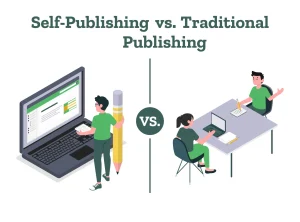
In this comprehensive guide, we’ll compare:
✅ Royalties & Earnings – Who pays more?
✅ Creative Control – Who decides your book’s fate?
✅ Time to Market – How long does each take?
✅ Marketing & Distribution – Who handles promotion?
✅ Upfront Costs – Which option is more affordable?
By the end, you’ll know exactly which publishing route is right for your book.
1. What is Traditional Publishing?
Traditional publishing involves signing a contract with an established publishing house (e.g., Harmony Publishing, Penguin Random House, HarperCollins). They handle:
- Editing, cover design, and formatting
- Printing and distribution to bookstores
- Marketing (though authors still need to promote themselves)
Pros of Traditional Publishing
✔ Prestige & Credibility – Being published by a big-name publisher can boost your author brand.
✔ No Upfront Costs – The publisher covers production expenses.
✔ Bookstore Placement – Easier to get into Barnes & Noble, indie bookstores, and libraries.
Cons of Traditional Publishing
❌ Highly Competitive – Landing a deal can take years.
❌ Lower Royalties (5-15%) – Publishers take most profits.
❌ Less Creative Control – They may change your title, cover, or content.
2. What is Self-Publishing?
Self-publishing means you publish independently using platforms like:
- Amazon KDP (Kindle Direct Publishing)
- IngramSpark (for wider distribution)
- Barnes & Noble Press
You handle (or hire professionals for):
📖 Editing & Proofreading
🎨 Cover Design & Formatting
📢 Marketing & Promotion
Pros of Self-Publishing
✔ Higher Royalties (35-70%) – You keep most profits.
✔ Full Creative Control – You decide the title, cover, and release date.
✔ Faster Time to Market – Publish in weeks, not years.
Cons of Self-Publishing
❌ Upfront Costs – Editing, design, and ads can add up.
❌ No Guaranteed Sales – You must handle marketing yourself.
❌ Less Industry Respect (Sometimes) – Some literary circles still favor traditionally published books.
3. Key Differences: Self-Publishing vs Traditional Publishing in the USA
| Factor | Traditional Publishing | Self-Publishing |
|---|---|---|
| Time to Publish | 1-3 years | 1-6 months |
| Royalties | 5-15% | 35-70% |
| Creative Control | Limited | Full control |
| Upfront Costs | $0 (Publisher pays) | 5,000+ |
| Marketing | Some support | Your responsibility |
| Distribution | Bookstores, Amazon | Mostly online |
4. Which Should You Choose?
Choose Traditional Publishing If:
- You want prestige and validation from the industry.
- You don’t want to handle editing, design, or marketing.
- You’re willing to wait years for publication.
Choose Self-Publishing If:
- You want higher royalties and faster publishing.
- You enjoy creative control and entrepreneurial marketing.
- You’re okay with investing upfront in professional services.
5. Hybrid Publishing: A Middle Ground?
Some authors use hybrid publishing, where they pay a publisher for services (like editing and distribution) but keep higher royalties. Be cautious—some “vanity publishers” overcharge for low-quality services.
Final Verdict: Self-Publishing vs Traditional Publishing
Both paths can succeed, but self-publishing is growing rapidly thanks to Amazon KDP and social media marketing. Many authors now start with self-publishing, build an audience, and later land traditional deals (e.g., The Martian, 50 Shades of Grey).
Want to self-publish successfully? Check out our step-by-step guide to How to Self-Publish a Book in 2024.
FAQ
Q: Can I switch from self-publishing to traditional publishing later?
A: Yes! Many authors self-publish first, prove sales, and then get traditional deals.
Q: Which makes more money, self-publishing or traditional?
A: Self-publishing offers higher royalties, but you must handle marketing. Traditional publishing provides advances but lower long-term earnings.
Q: Do traditional publishers accept unagented submissions?
A: Most big publishers require an agent, but some small presses accept direct submissions.
Conclusion
The best choice between self-publishing vs traditional publishing in the USA depends on your goals. If you want speed, control, and higher profits, self-publishing is the future. If you seek prestige and hands-off production, traditional publishing may be better.